
“Want a Cookie?”
Cookies are small pieces of data a website saves in your browser so it can recognize you later—remembering things like your language, login, or shopping cart. But the same mechanism can also be used for cross-site tracking: when a page loads third-party ads, analytics, or widgets, those companies can set their own cookies and connect your visits across many sites. Over time, even simple identifiers can build detailed profiles, making browsing traceable beyond the site you intended to visit.
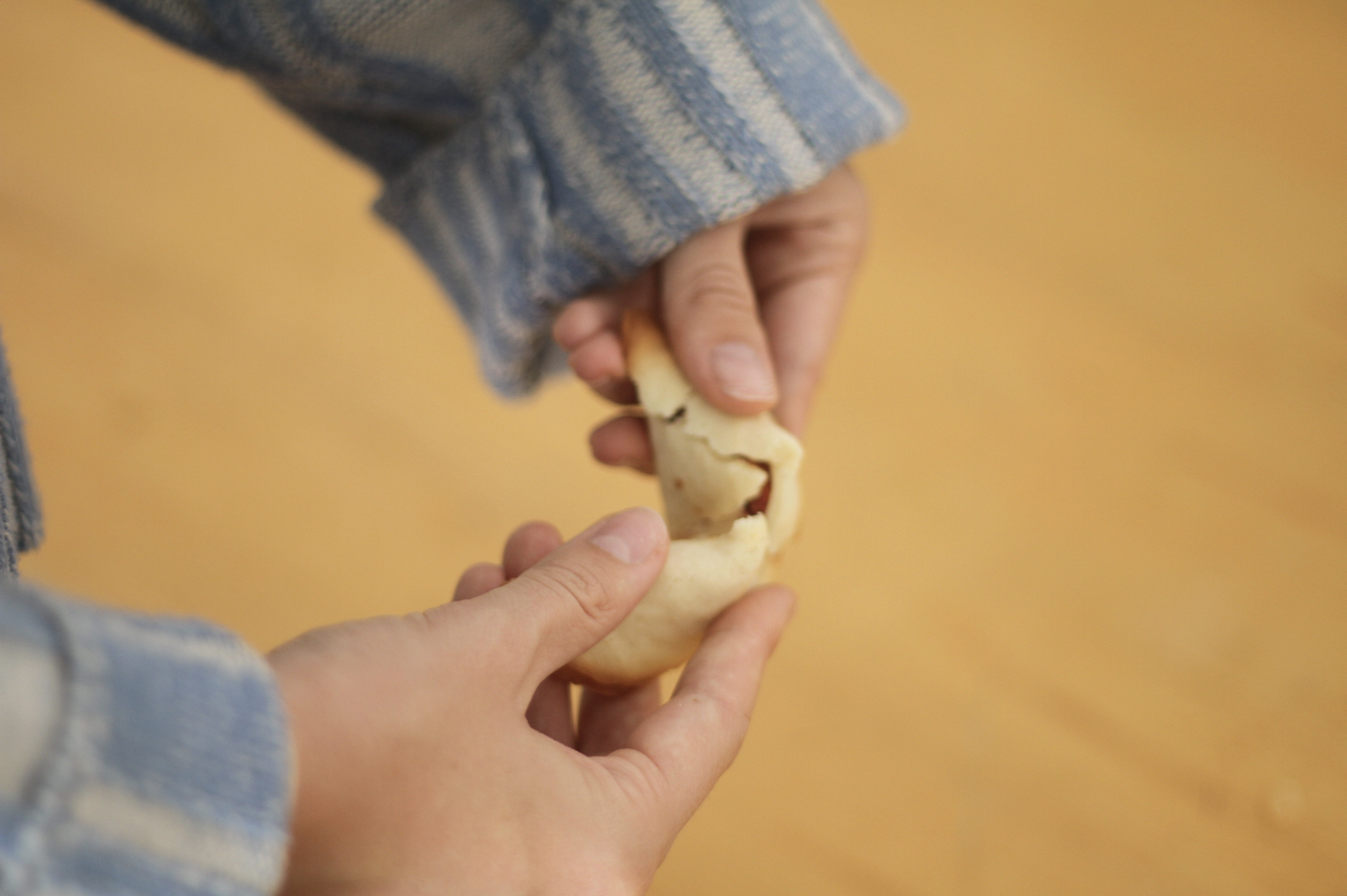
“Want a Cookie?” responds to the gap between how cookies function and how little most people know about what they enable. I’m making physical fortune cookies with fortunes that state, in direct language, what digital cookies and trackers can reveal. The object is familiar and ordinary; the message is specific and honest—even if what it reveals can be unsettling.
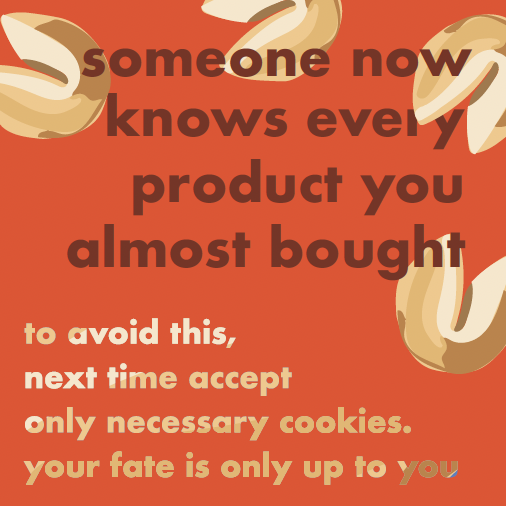
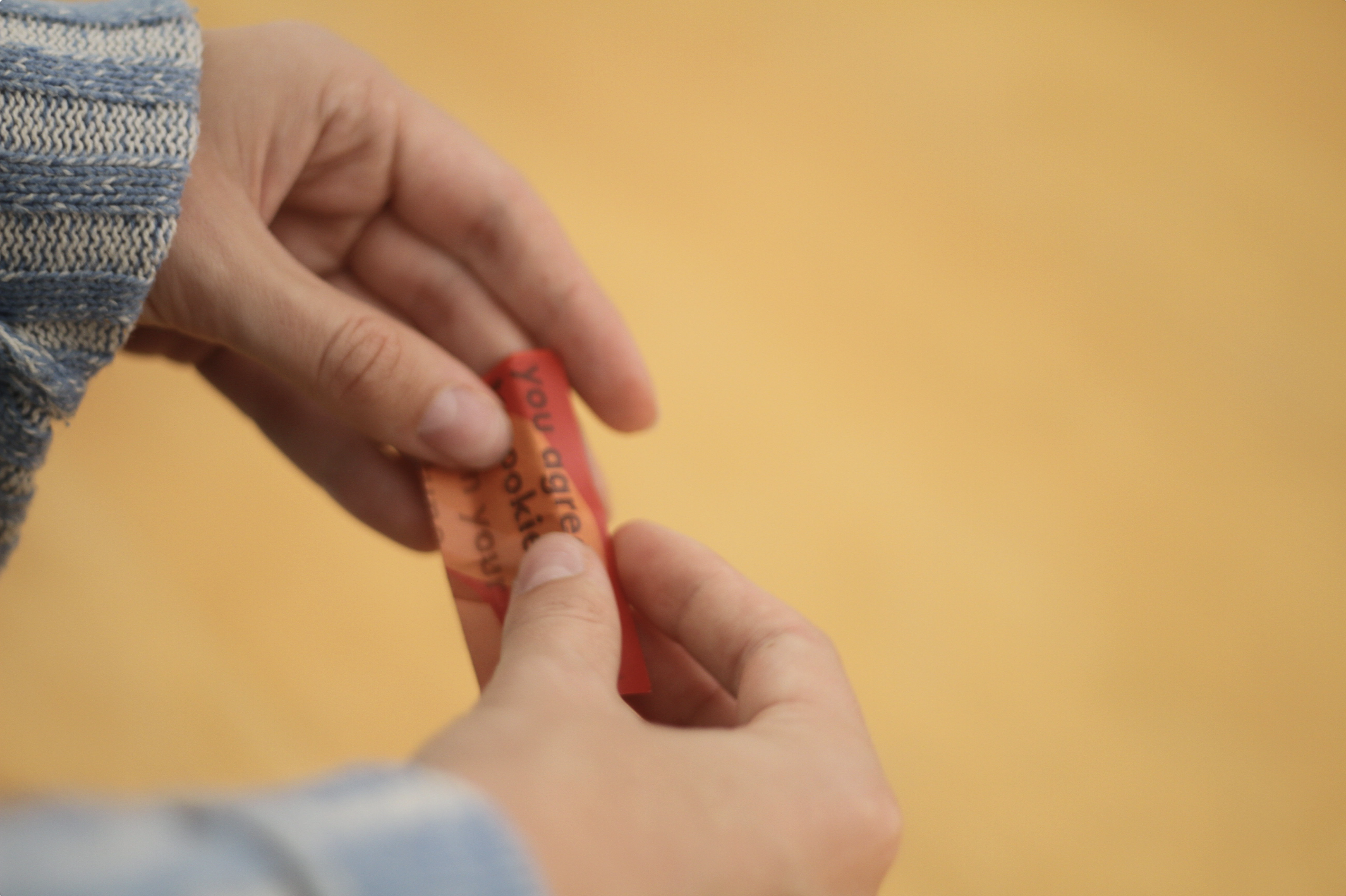
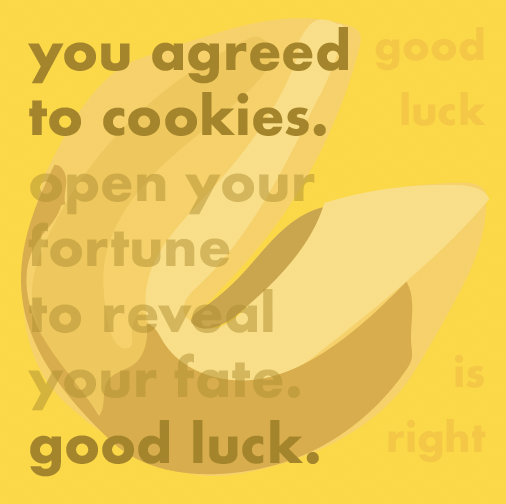
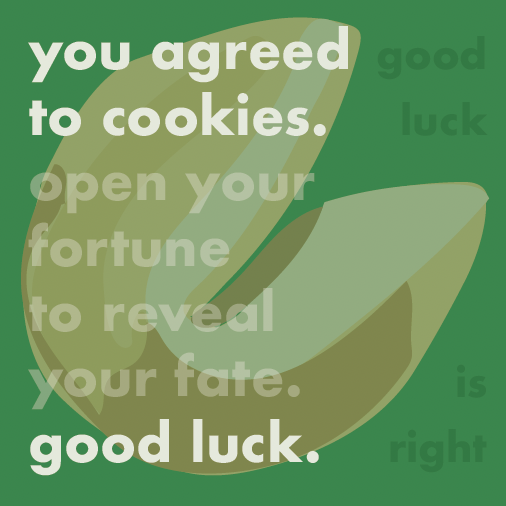
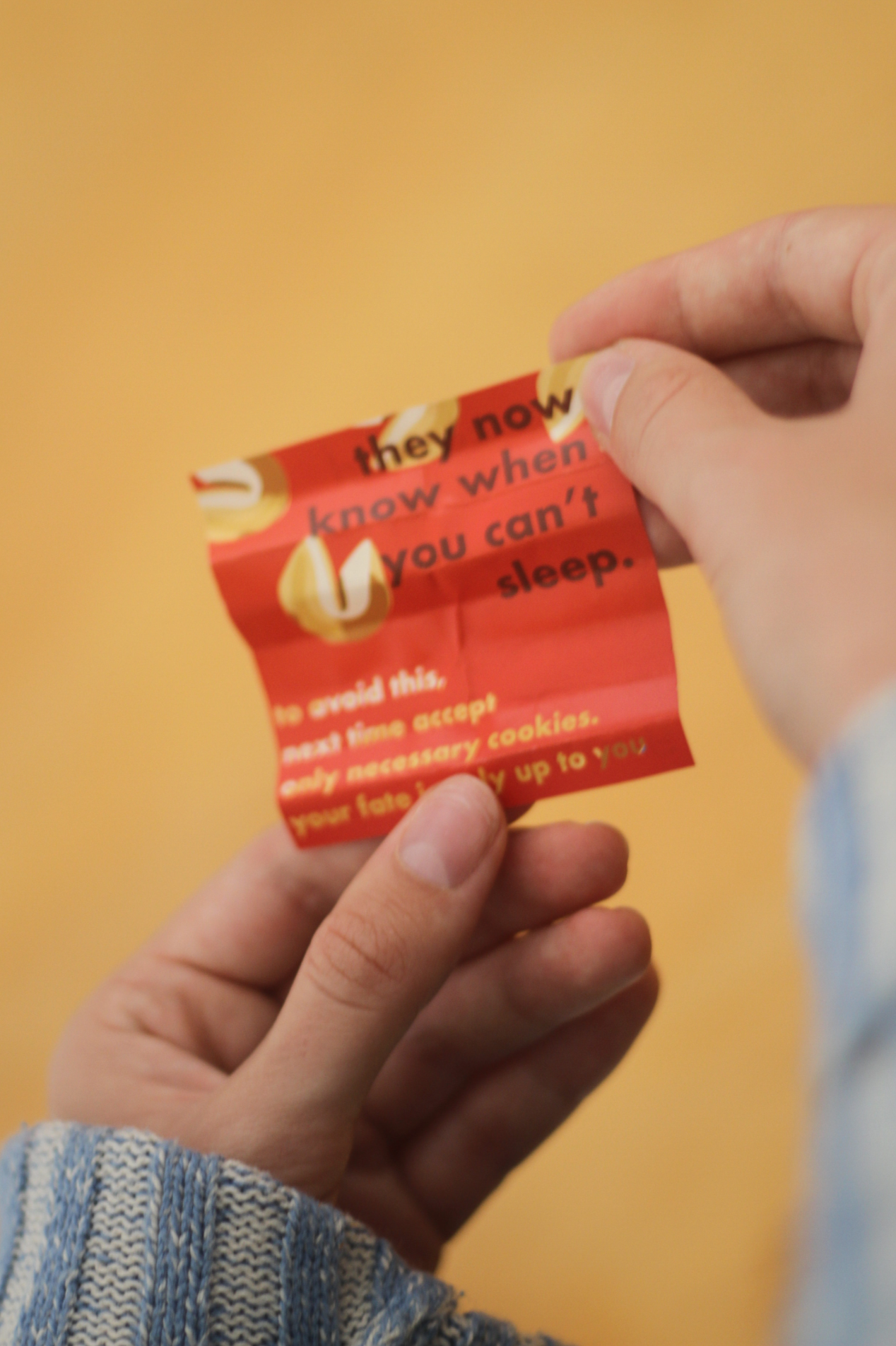
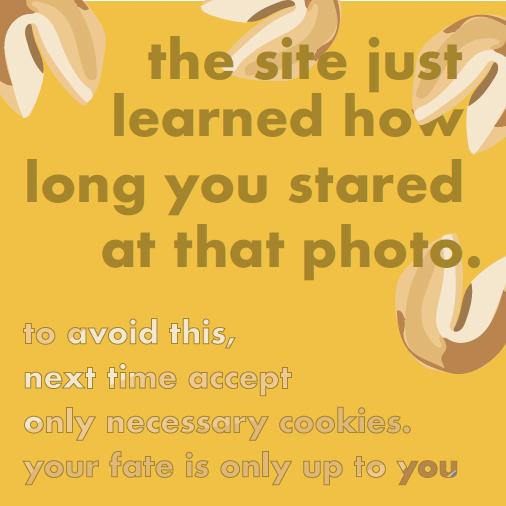
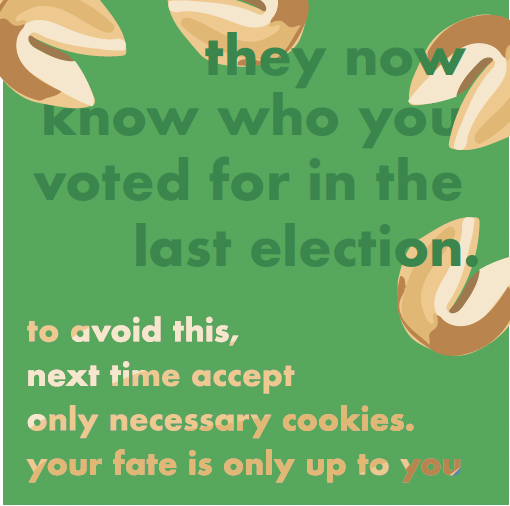
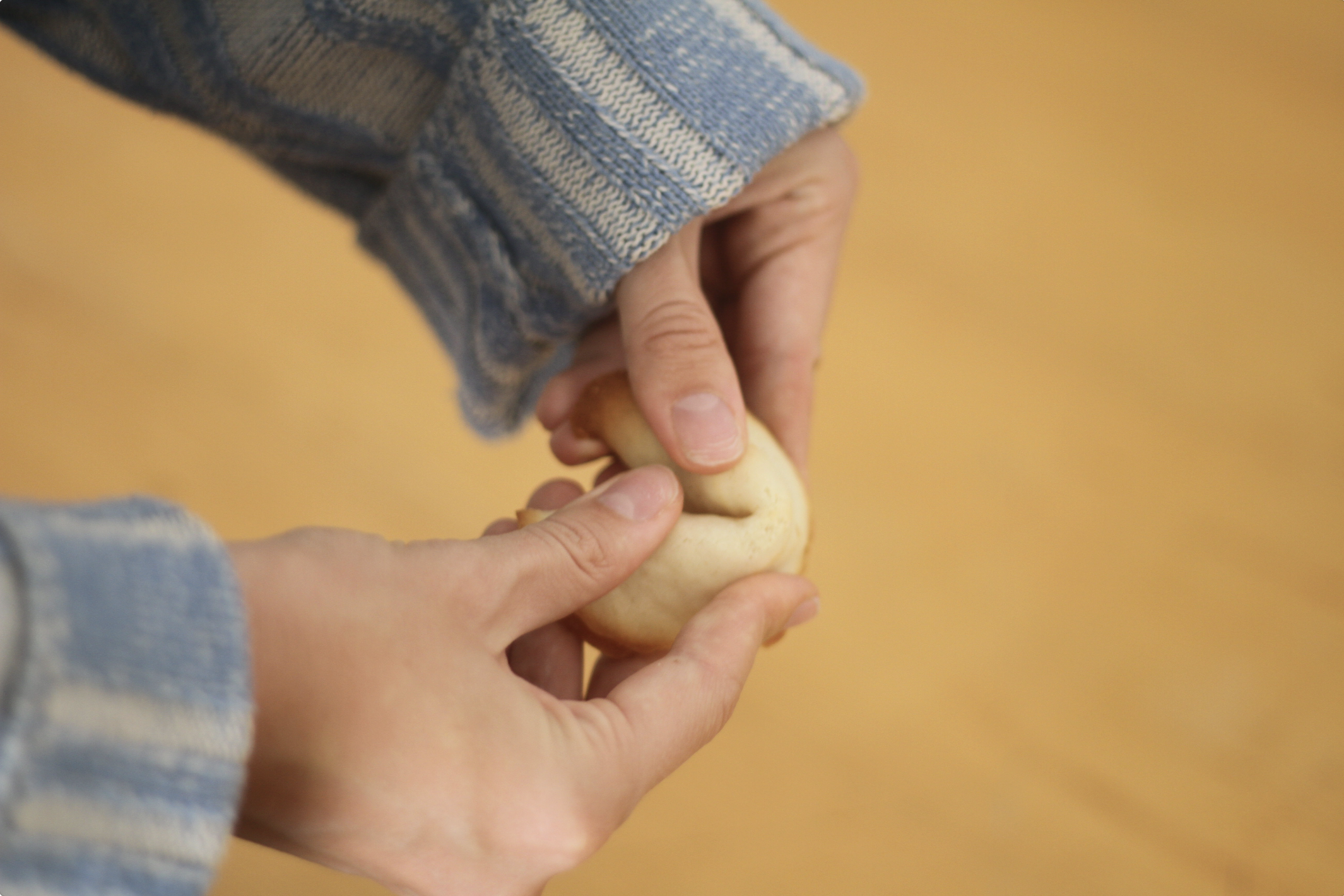
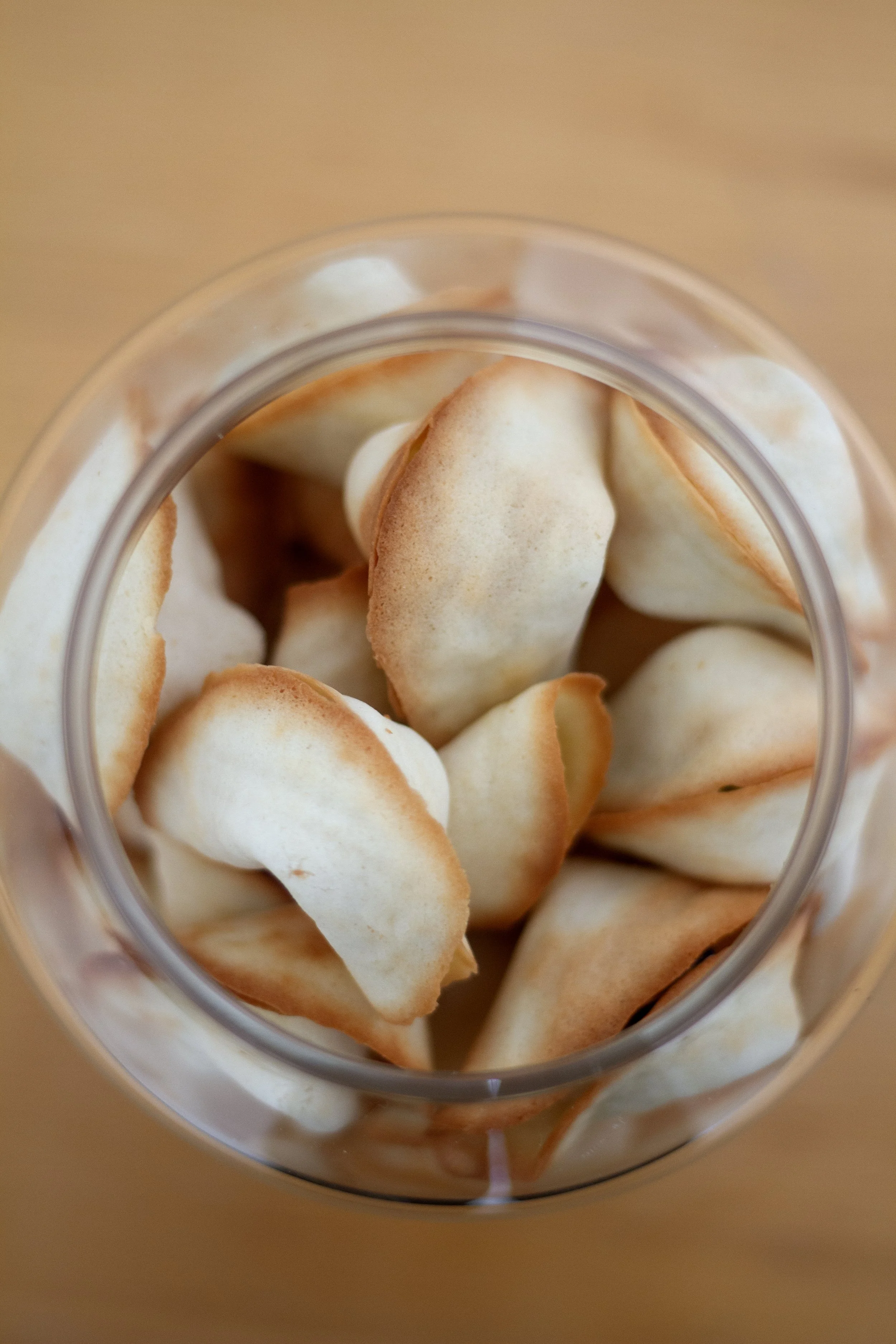
The installation uses a plain white cookie jar. I’ll ask visitors, “Do you want a cookie?” and won’t explain anything further at first. The interaction mirrors online consent: people are often prompted to accept something before they have context or a clear sense of scope. Each cookie contains a two-sided slip. The first side reads, “You agreed to cookies. Open your fortune to reveal your fate. Good luck.” When the visitor turns it over, the reverse names one common, usually invisible data practice (for example: “a third-party pixel followed this visit to your next site” or “your browser sent a unique ID that links today’s pages to last week’s”). Beneath it is a short instruction about how to avoid it, and after they open the cookie, I explain the distinction between necessary cookies and non-essential ones—and that non-essential cookies can be refused.
Click here to view the website version!
Product design + visual identity, 2025
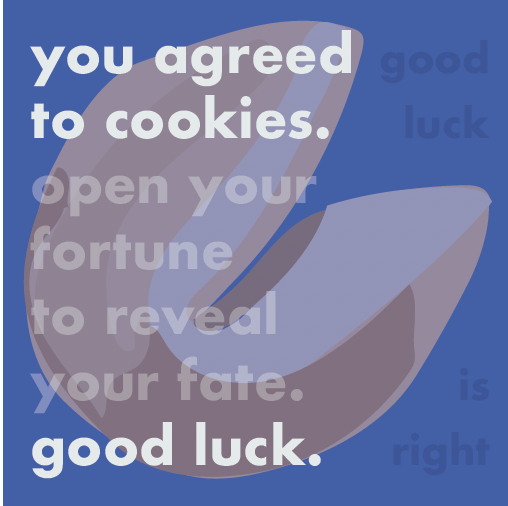
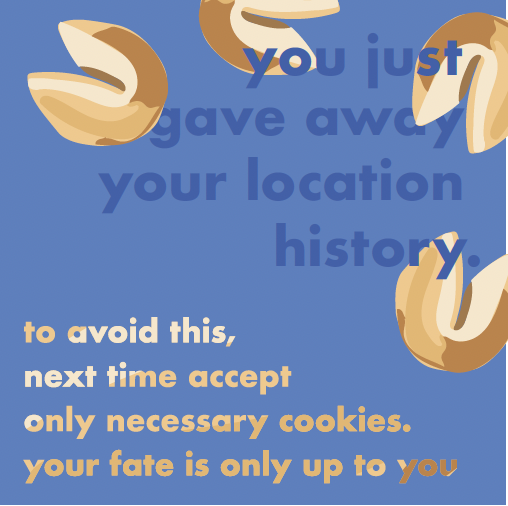
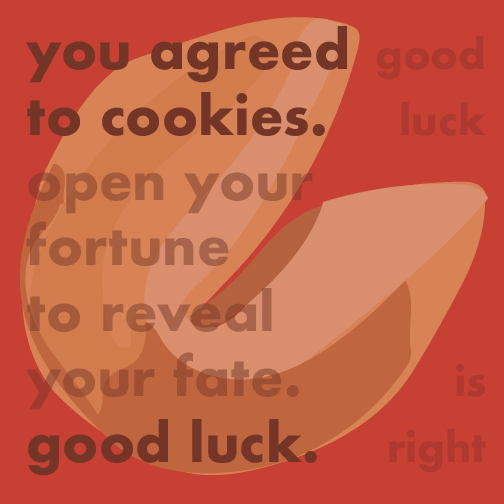
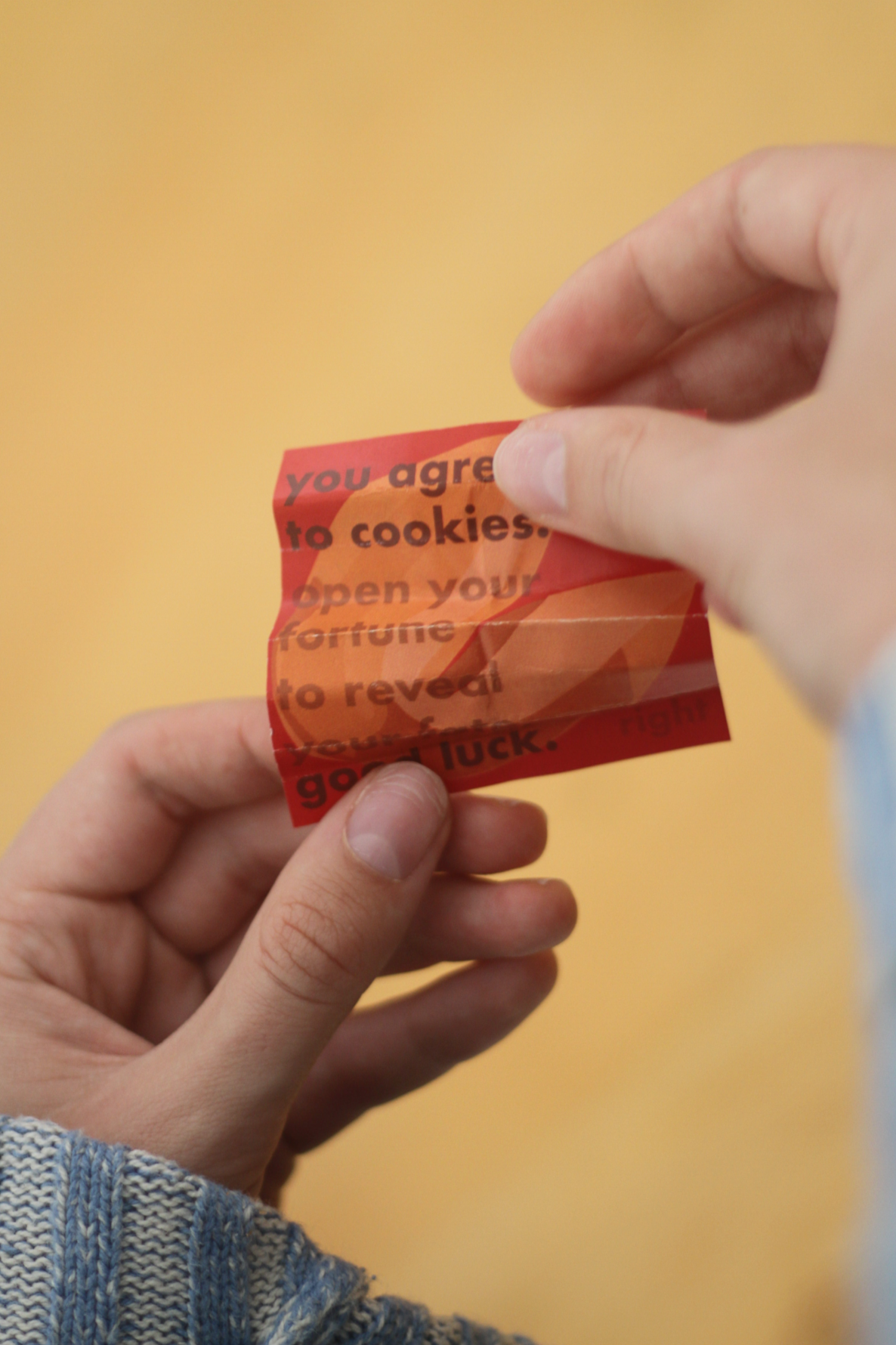
Selection of Fortunes